
+91 99099 62080 · Mon–Sat · 9:00–19:00
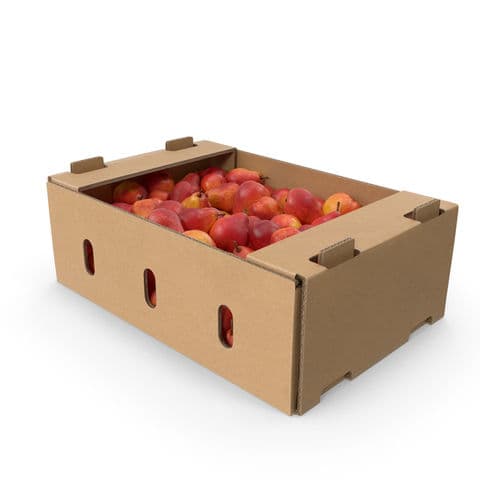
Fruit and vegetable boxes with engineered ventilation and moisture-resistant board — fresh produce breathes while stacks stay strong in cold storage.
Produce respires and sweats; airflow fights strength. Our vent patterns are placed to preserve box compression while letting produce breathe, on boards that shrug off field and cold-room moisture.
Because this product serves a regulated, quality-sensitive buyer, every stage carries a checkpoint: incoming kraft is GSM-verified, board is Cobb- and burst-tested per lot, blanks are dimension-checked against the approved die line, and print is compared to your signed proof before dispatch. Test records travel with the consignment.
| Ventilation | Engineered hole patterns |
|---|---|
| Boards | Moisture-resistant 5-ply |
| Styles | Open trays, telescopic, RSC |
| Stacking | High-BCT for cold rooms |
| Printing | Up to 4-colour multicolour flexo, proofed |
| Quotation | Within 4 business hours |
The right spec here balances protection with line efficiency and compliance: internal dimensions sized to your product with the correct clearance, board grade sized to stacking reality (not catalogue habit), and documentation matched to what your auditors or buyers actually ask for. We start from your product sample and transit route, then engineer backwards.
Indian corrugated boxes are governed by IS 2771:2022, which ties board type to the maximum mass of contents and prescribes minimum bursting strength and — new in the 2022 revision — a minimum Edge Crush Test value. The rows relevant to fruit and vegetable boxes:
Kraft liners (dark) bonded to fluted medium (waves). More walls = more stacking backbone — the exact minimums are in the IS 2771:2022 table below.
| Board type | Max contents | Max L+W+H | Min bursting strength | Min ECT |
|---|---|---|---|---|
| Double wall (5-ply) | Up to 20 kg | 1525 mm | 12 kgf/cm² | 5.0 kN/m |
| Up to 25 kg | 1715 mm | 13 kgf/cm² | 5.3 kN/m | |
| Up to 30 kg | 1905 mm | 14 kgf/cm² | 5.6 kN/m | |
| Up to 40 kg | 2286 mm | 17 kgf/cm² | 7.0 kN/m |
Reference values from IS 2771 (Part 1): 2022, Bureau of Indian Standards — the governing Indian specification for corrugated fibreboard boxes. We engineer to or beyond these minimums for your load.
Humidity is the silent killer of box performance: independent studies show corrugated board loses 30–40% of its compression strength at 80% relative humidity, and losses can exceed 50% at 90% RH — exactly the conditions inside a sea-freight container or a non-air-conditioned monsoon warehouse. Board moisture content roughly doubles between 50% RH and 90% RH, which is why a box that stacks perfectly in the plant can crumple mid-voyage. Our answer is engineering, not hope: coated liners, Cobb-verified boards and strength safety factors sized for the real environment your cartons will live in.
The Cobb test (IS 4006 / TAPPI T441) measures how many grams of water a square metre of board absorbs in a timed interval — lower is better. IS 2771:2022 caps water absorption at 225 g/m² over 30 minutes for standard board; export-grade moisture-resistant work typically demands Cobb values of 30–40 g/m² or lower, because material above ~45 g/m² shows measurable dimensional change in ordinary warehouse humidity. We test per lot and share the numbers, so "moisture-resistant" on our documentation is a measurement, not a marketing word.
Every tonne of recycled-fibre corrugated board avoids roughly 180 kg of CO₂ versus virgin production (DEFRA life-cycle factors), and industry equivalences credit each tonne of recycled paper with saving about 17 trees, ~26,500 litres of water and ~4,000 kWh of energy (US EPA). Corrugated is also India’s practical answer to the single-use-plastic phase-out: recyclable, repulpable and biodegradable in weeks rather than centuries.
Commercially, corrugated boxes fall under HSN 4819, and GST on corrugated boxes was reduced from 12% to 5% with effect from 22 September 2025 — worth re-checking on old supplier quotations. Pricing is driven by board grammage (GSM), ply, kraft paper prices (which rose ~6% through 2025), printing and quantity; we quote engineered specifications within 4 business hours, offer sampling before you commit, and support everything from trial lots to annual rate contracts.
Poorly placed holes do. We position vents away from load paths so airflow comes without losing stacking strength.
Yes — structure and vent pattern are tuned per commodity, weight and transit duration.
Corrugated boxes fall under HSN 4819; GST was reduced from 12% to 5% effective 22 September 2025 (56th GST Council). We invoice at the current applicable rate with full documentation.
MOQs depend on size and print complexity — trial lots are welcome, and repeat production is scheduled to committed dispatch dates. Sampling comes first on request; quotations are returned within 4 business hours.
Yes — scheduled routes cover the full 160 km radius around our Kosamba, Surat plant (Surat, Hazira, Navsari, Bharuch, Ankleshwar, Vapi, Valsad, Daman, Silvassa, Vadodara), with pan-India full-truck programmes beyond it.
Serving Surat, Hazira, Bharuch, Ankleshwar, Vapi, Navsari, Vadodara and all of industrial Gujarat within 160 km — plus pan-India programmes.
Request a Quote