
+91 99099 62080 · Mon–Sat · 9:00–19:00
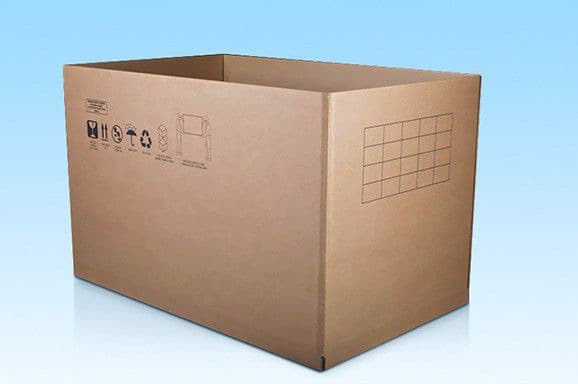
Export packaging engineered for 30–45 day sea transit: moisture-resistant boards, container-optimised dimensions and compliant international markings.
Export losses usually trace to humidity collapse, wasted container space or marking errors. We solve all three — Cobb-tested boards, sizes built around container maths, and shipping marks printed right the first time.
Production runs on a fully automatic corrugation line: kraft reels are conditioned and stored dry, fluted and bonded into 3/5/7-ply board, then printed, slotted, creased, die-cut and joined in a continuous, monitored flow. Automation is why lot 40 matches lot 1 — flute geometry, bond strength and blank dimensions are machine-held, not operator-remembered.
| Transit rating | 30–45 day sea voyages |
|---|---|
| Boards | Moisture-resistant, Cobb-tested |
| Sizing | Engineered to container dimensions |
| Markings | International symbols & buyer specs |
| Printing | Up to 4-colour multicolour flexo, proofed |
| Quotation | Within 4 business hours |
Choosing the right specification starts with three questions: how heavy is the packed box, how high will it stack (and for how long), and how humid is the journey? Weight and stack height set the ply and ECT; duration adds a creep safety factor; humidity decides whether standard kraft or Cobb-controlled coated board is the honest choice. Share those three facts and our engineers will spec the rest.
Indian corrugated boxes are governed by IS 2771:2022, which ties board type to the maximum mass of contents and prescribes minimum bursting strength and — new in the 2022 revision — a minimum Edge Crush Test value. The rows relevant to export packaging:
Kraft liners (dark) bonded to fluted medium (waves). More walls = more stacking backbone — the exact minimums are in the IS 2771:2022 table below.
| Board type | Max contents | Max L+W+H | Min bursting strength | Min ECT |
|---|---|---|---|---|
| Double wall (5-ply) | Up to 20 kg | 1525 mm | 12 kgf/cm² | 5.0 kN/m |
| Up to 25 kg | 1715 mm | 13 kgf/cm² | 5.3 kN/m | |
| Up to 30 kg | 1905 mm | 14 kgf/cm² | 5.6 kN/m | |
| Up to 40 kg | 2286 mm | 17 kgf/cm² | 7.0 kN/m | |
| Triple wall (7-ply) | Up to 55 kg | 2667 mm | 24 kgf/cm² | 9.6 kN/m |
| Up to 75 kg | 2921 mm | 35 kgf/cm² | 12.4 kN/m |
Reference values from IS 2771 (Part 1): 2022, Bureau of Indian Standards — the governing Indian specification for corrugated fibreboard boxes. We engineer to or beyond these minimums for your load.
Humidity is the silent killer of box performance: independent studies show corrugated board loses 30–40% of its compression strength at 80% relative humidity, and losses can exceed 50% at 90% RH — exactly the conditions inside a sea-freight container or a non-air-conditioned monsoon warehouse. Board moisture content roughly doubles between 50% RH and 90% RH, which is why a box that stacks perfectly in the plant can crumple mid-voyage. Our answer is engineering, not hope: coated liners, Cobb-verified boards and strength safety factors sized for the real environment your cartons will live in.
The Cobb test (IS 4006 / TAPPI T441) measures how many grams of water a square metre of board absorbs in a timed interval — lower is better. IS 2771:2022 caps water absorption at 225 g/m² over 30 minutes for standard board; export-grade moisture-resistant work typically demands Cobb values of 30–40 g/m² or lower, because material above ~45 g/m² shows measurable dimensional change in ordinary warehouse humidity. We test per lot and share the numbers, so "moisture-resistant" on our documentation is a measurement, not a marketing word.
Every tonne of recycled-fibre corrugated board avoids roughly 180 kg of CO₂ versus virgin production (DEFRA life-cycle factors), and industry equivalences credit each tonne of recycled paper with saving about 17 trees, ~26,500 litres of water and ~4,000 kWh of energy (US EPA). Corrugated is also India’s practical answer to the single-use-plastic phase-out: recyclable, repulpable and biodegradable in weeks rather than centuries.
Commercially, corrugated boxes fall under HSN 4819, and GST on corrugated boxes was reduced from 12% to 5% with effect from 22 September 2025 — worth re-checking on old supplier quotations. Pricing is driven by board grammage (GSM), ply, kraft paper prices (which rose ~6% through 2025), printing and quantity; we quote engineered specifications within 4 business hours, offer sampling before you commit, and support everything from trial lots to annual rate contracts.
Our highway-adjacent plant aligns dispatches to Mundra, Hazira and Nhava Sheva schedules and cut-offs.
Yes — handling symbols, consignee details, and country-specific marks are proofed and printed per your documentation.
Corrugated boxes fall under HSN 4819; GST was reduced from 12% to 5% effective 22 September 2025 (56th GST Council). We invoice at the current applicable rate with full documentation.
MOQs depend on size and print complexity — trial lots are welcome, and repeat production is scheduled to committed dispatch dates. Sampling comes first on request; quotations are returned within 4 business hours.
Yes — scheduled routes cover the full 160 km radius around our Kosamba, Surat plant (Surat, Hazira, Navsari, Bharuch, Ankleshwar, Vapi, Valsad, Daman, Silvassa, Vadodara), with pan-India full-truck programmes beyond it.
Serving Surat, Hazira, Bharuch, Ankleshwar, Vapi, Navsari, Vadodara and all of industrial Gujarat within 160 km — plus pan-India programmes.
Request a Quote